The 'September 11 mindset' and the heavy price to pay for it
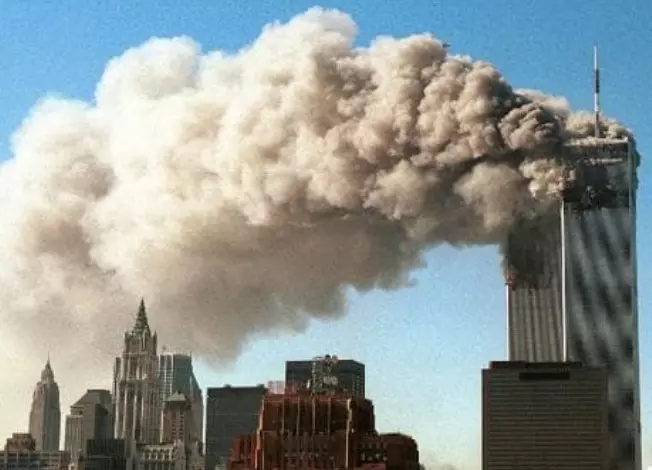


The 20th anniversary of the September 11 attacks on the World Trade Center and the Pentagon will focus worldwide on the withdrawal of the United States military from Afghanistan where the attacks were plotted, and the return to power of the Taliban which hosted the key conspirators behind the plot.
In the US, there will be a lot of attention on the children of 9/11, who are now adults and have spent their entire life in a world completely transformed by the cataclysmic events of that day 20 years ago. These children's elders will generally lament that the worst terrorist attacks on US soil have produced, two decades later, the most divided society that their country has known since the American Civil War.
In India, the popular view, judging by opinion makers on public platforms and their audience reactions, as well as selections of drawing room conversations, is that the US should not have left Afghanistan the way they did, and had a global duty to keep the Taliban at bay. If nothing else, to foil Pakistan's internal meddling in India through a 'Talibanised' Afghan route. Such a partisan point of view, which entirely constitutes self-interest, is seen as logical from Pathankot to Palakkad and from Jamnagar to Jalpaiguri.
All these scenarios listed above, especially the populist Indian view, ignores the terrible cost of the fallout of what can be called a 'September 11 mindset'. In nearly two decades, such a mindset has gained global acceptance as reflected in several defensive or pre-emptive wars. These wars began in Afghanistan in October 2001, escalated to Yemen a year later, spread to Iraq in March 2003, grievously hurt Lebanon in Israel-Hezbollah fighting in 2006, and has since engulfed Libya, Syria and many more countries.
Such huge costs in loss of lives, livelihoods, wealth and health have been largely hidden or ignored when politico-military decisions worldwide, including the US withdrawal from Afghanistan, are called to account. Brown University, an Ivy League institution in Rhode Island, has accounted for some of those costs in exceptional research and its results do not paint a pretty picture.